
Roof Geometry
Include valleys, hips, ridges, dormers, slope changes, and areas where panels meet walls or other roof surfaces.

Bryton Roofing
Discuss metal roof repair, inspection, and replacement with Bryton Roofing. Explore panel options, finishes, and the details needed for your home. For a new installation, include your building plans and proposed scope when you contact us.
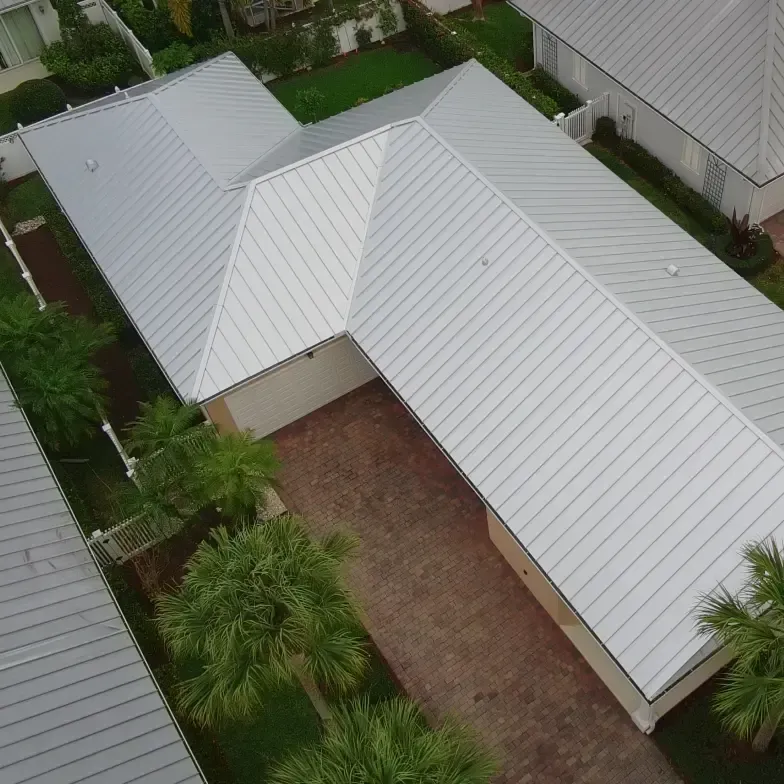
A metal roofing scope includes more than panel color. Seams, attachment, flashing, underlayment, and connections to other roof areas all belong in the planning discussion.
Define the Project
The proposed system needs to suit the roof’s shape, existing conditions, property exposure, and architectural requirements.
Include valleys, hips, ridges, dormers, slope changes, and areas where panels meet walls or other roof surfaces.
Discuss the profile, material, thickness, seam design, and available finish for the proposed system.
Review accessible conditions, existing layers, and the preparation included beneath new panels.
Ask which clips, fasteners, edge components, and perimeter details are part of the specification.
Account for pipes, vents, skylights, walls, and other openings that interrupt the panel layout.
Review the selected product’s suitability, maintenance guidance, and written limitations for the property location.
Metal Roofing Options
Discuss available systems and the details that distinguish each option. Product suitability and availability should be confirmed for your project.
Standing seam systems use panels joined at raised seams. Discuss the specific seam design, attachment method, finish, and roof details included in the proposed system.
If you are considering metal shingles, a tile-look profile, or another specialty panel, share the product name or reference images. Ask which options are available and suitable for your property.
A localized repair may be appropriate when the concern is limited and the surrounding system remains serviceable. Share leak history and previous repair information during the evaluation.
Include adjoining tile, shingle, and low-slope areas when discussing metal roofing. The scope should explain how the different sections connect and which transition details are included.
Project Planning
Use these stages to discuss the proposed work. Timing and sequence depend on the agreed scope, material availability, and property conditions.
Start with roof shape, visible conditions, previous repairs, and the areas that prompted your inquiry.
Compare suitable panel systems and record the selected material, profile, finish, and supporting components.
Clarify panel layout, custom trim, transitions, deliveries, property protection, and the boundaries of the work.
The agreed scope identifies the removal, preparation, panel work, and flashing details included in the project.
Discuss completed work, any remaining items, applicable records, and care guidance for the selected finish and system.
Include your property location when discussing metal panels and finishes. Ask how the proposed product’s specifications and written limitations relate to your home’s exposure.
Bryton’s listed address is 1312 Commerce Lane, Suite 3A, Jupiter, FL 33458. Ask about project availability in Palm Beach, Martin, or St. Lucie County.
Ask About Your Property →Review any location-related limitations in the proposed material, finish, and warranty documents.
Check community requirements for panel profile, color, finish, and visible trim before ordering.
Discuss unloading space, staging, driveway access, landscaping, and restrictions on work hours.
Confirm availability of panels, custom trim, accessories, and compatible materials for existing-roof repairs.
Compare the Scope
Consider the extent of the problem, surrounding roof condition, and practicality of a compatible repair.
A targeted repair may be suitable when the affected detail is identifiable and surrounding materials remain serviceable.
Replacement may warrant consideration when deterioration affects multiple areas or repairs have not resolved recurring concerns.
Metal Project Pricing
Compare the complete installation scope, including panels, preparation, attachment, flashing, and exclusions.
Roof area, height, valleys, dormers, and slope changes influence panel quantities and detail work.
The specified metal, thickness, profile, and seam design define a significant part of the material scope.
Compare the named finish system, color selection, available accessories, and applicable written coverage.
Clarify existing-roof removal and the procedure for pricing concealed decking damage.
Check which clips, fasteners, underlayment, and preparation materials are included.
Valleys, walls, skylights, edges, and other connections may require project-specific components.
Ask about delivery logistics, protection, disposal, and applicable project fees or inspections.
Product availability, custom orders, samples, and community approvals influence project scheduling.
Before Approving the Work
Use these questions to clarify the products, details, and records included in your project.
Ask for the manufacturer, profile, material, and thickness to be identified in writing.
Confirm the finish name, color, care guidance, and any location-specific limitations.
Ask which attachment components are specified and how the selected system’s requirements are addressed.
Clarify the included work around vents, pipes, skylights, and other roof penetrations.
Identify removal boundaries, disposal, existing layers, and deck preparation.
Agree on documentation and authorization before additional work outside the original scope proceeds.
Ask about product information, completion records, and applicable written warranties.
Request guidance for the chosen system and ask which maintenance tasks require professional help.
Metal Roofing Questions
Common questions about panel systems, repair, finishes, and project planning.
Standing seam roofing uses panels joined at raised seams, commonly with concealed attachment. Panel dimensions, seam design, material, finish, and installation details vary by system.
Suitability depends on the specific roof and product. Discuss roof shape, property exposure, panel specifications, architectural preferences, and community requirements before selecting a system.
Corrosion risk varies with the metal, finish, exposure, and condition. Ask for product-specific guidance and review any coastal limitations in the manufacturer’s written documents.
Sound depends on the complete roof and building assembly, including the deck, insulation, and interior construction. Discuss noise concerns in relation to the proposed assembly rather than the panel alone.
A localized repair may be possible when surrounding materials remain serviceable and a compatible repair approach is available. An evaluation should identify the affected detail and the extent of the concern.
Potential sources include seams, flashing, penetrations, fasteners, damaged panels, and roof transitions. The entry point needs investigation; the visible interior stain alone may not identify it.
Yes. Temperature changes cause metal to move. Ask how the selected panel system’s attachment and detail requirements account for that movement.
This requires a project-specific assessment of existing materials, roof condition, product instructions, and applicable requirements. Ask whether removal is recommended and what remains concealed if existing layers stay in place.
Bring your community’s requirements to the project discussion and ask which product details or samples can be provided. Confirm responsibility for the submission; the HOA controls its approval decision.
Service life varies by material, finish, installation, exposure, and care. Review the selected product’s documentation and distinguish written warranty coverage from an expected lifespan.
Compare panel material, thickness, profile, finish, attachment, underlayment, flashing, preparation, removal, and exclusions. Include change procedures and written coverage in the comparison.
Contact Bryton with your property address in Jupiter or the surrounding Palm Beach, Martin, and St. Lucie county area. Confirm availability for your roof system, project scope, and requested timing.
Roofing, Done the Bryton Way.
Share your address, existing roof concerns, and whether you are considering repair, replacement, or a new installation.
Roofing License Number CCC1336269