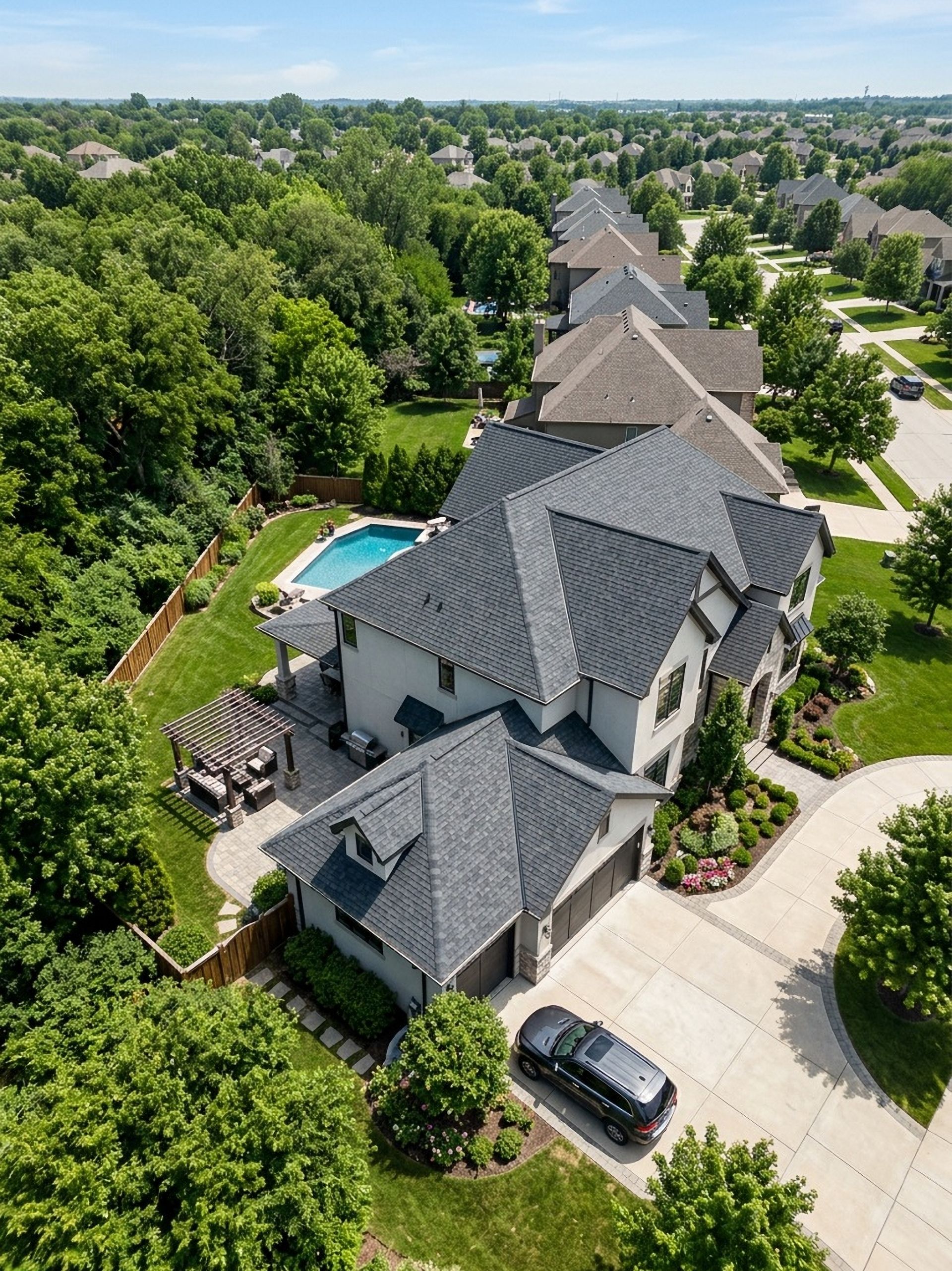
Evaluate the Roof and Property
Bryton reviews the visible roof condition, project goals, system options, access, HOA considerations, and whether the requested work fits its service scope.
555-555-5555
mymail@mailservice.com
Financing may help qualified homeowners spread the cost of an eligible roofing project over time. Bryton Roofing keeps the roofing scope separate from the lender’s credit decision so you can evaluate the roof, the financing offer, and the total cost without confusing one with the other.
A third-party lender may offer approved applicants a loan or payment plan for an eligible roofing project. The applicant submits financial information to the lender, reviews any offers, and decides whether the rate, fees, term, payment, and total repayment fit the household budget. Bryton defines the roofing scope; the lender controls underwriting and financing terms.
Financing Process
The roofing decision and the borrowing decision should be reviewed in sequence. You need enough project information to understand what is being financed before you decide whether an offer makes sense.
Bryton reviews the visible roof condition, project goals, system options, access, HOA considerations, and whether the requested work fits its service scope.
The proposal should identify the selected roofing system, known work, allowances, exclusions, payment sequence, and process for discovered conditions.
If an active program fits the project, the homeowner applies directly through the lender’s current process and provides the financial information the lender requests.
Compare amount financed, APR, interest, fees, term, payment, prepayment provisions, deferred-interest conditions, and total repayment before accepting.
Financing approval alone does not schedule the roof. The construction agreement, materials, permits, HOA approvals, funding conditions, and production timing still need confirmation.
Before You Apply
Financing can solve a timing problem, but bad terms can create a larger money problem. Ask these questions before signing a loan agreement or relying on a promotional payment.
Know the project price before financing so you can see whether lender fees, contractor fees, or financed charges change the total.
APR is generally more useful than the stated interest rate alone because it can reflect certain financing costs. Review the lender disclosure.
Multiply-and-guess is not enough. Use the written payment schedule and total-of-payments disclosure when provided.
“No interest if paid in full” can be very different from “0% interest.” Understand what happens if the balance remains after the promotional period.
Confirm whether prepayment is allowed, whether any penalty applies, and how extra payments are credited to principal.
Hidden damage or approved additions can change the roof price. Ask how additional work would be paid if the financing amount is already fixed.
Keep the Decisions Separate
A loan and an insurance claim solve different problems. Financing addresses how the homeowner pays. Insurance addresses whether a covered loss qualifies under a specific policy and claim decision.
A lender reviews the applicant and program requirements. The borrower reviews rates, fees, payment, term, security interest if any, and total repayment.
The carrier interprets the policy and claim facts. Deductibles, exclusions, depreciation, limits, documentation, and coverage decisions remain insurance matters.
Compare More Than the Payment
A low monthly number can hide a long term, higher APR, fees, or a large total repayment. Compare the actual written offer against other ways you could responsibly fund the work.
The principal may differ from the cash price if fees, optional products, or other charges are included.
Understand both figures and which fees are reflected in the APR under the lender’s disclosure.
Longer terms can reduce the monthly payment while increasing the time and total interest paid.
Confirm when payments begin, whether the amount can change, and whether autopay assumptions affect the quote.
Ask whether fees are paid upfront, deducted from proceeds, added to the loan, or reflected elsewhere.
Know the deadline, minimum-payment limits, and whether accrued interest is charged if the balance is not fully paid.
Review penalties, payoff procedures, and how additional payments are applied.
Use the lender’s final disclosure to understand what the financing can cost if paid according to schedule.
Jupiter Roofing Budgets
The roof scope drives the amount that may need to be financed. South Florida materials, roof geometry, property access, HOA requirements, permits, and hidden conditions can all affect the final project cost.
Area, pitch, stories, valleys, walls, penetrations, transitions, and access affect material and labor.
Tile, metal, asphalt shingles, low-slope components, underlayment, flashing, and accessories create different scopes.
Material type, layers, disposal, attachment, and removal conditions can change the work required.
Damage beneath the roof may not be measurable until removal exposes the deck and related construction.
Approvals, samples, profiles, colors, lead times, and availability can affect price and schedule.
Applicable fees, product documentation, permit processing, and scheduled inspections form part of project planning.
Roof Financing Questions
These answers explain the division between Bryton’s roofing scope and the lender’s financing decision.
Financing may be available for eligible projects and qualified applicants through an active third-party program. Contact Bryton for the current program link and project eligibility before relying on any offer.
Requirements are controlled by the lender and can change by program. Bryton does not set underwriting standards or guarantee approval based on a credit score.
That depends on the lender’s current application process. Review whether the initial inquiry is soft or hard and when a hard credit pull may occur before submitting personal information.
Timing depends on the lender, applicant, requested amount, documentation, identity verification, and program. An approval does not automatically mean the roof can be scheduled immediately.
Project eligibility varies by lender program and requested amount. Bryton must also confirm that the proposed repair or replacement fits its service scope.
Potentially, when the related work is part of an eligible written project scope and the lender allows it. Confirm the financed amount and every included item before accepting.
Not necessarily. Third-party financing creates an agreement between the borrower and lender. The roofing contract and lender agreement are separate documents with separate obligations.
Whether funds may be used for a deductible depends on the lender terms and applicable law. The homeowner remains responsible for the deductible and policy obligations; Bryton does not waive or determine them.
The roofing contract should explain discovered conditions and change approvals. Ask in advance how added work would be funded if it exceeds the approved financing amount.
Bring the property address, requested service, known roof type, HOA information, project timing, and any existing inspection or claim documents relevant to the roofing scope. Do not send sensitive financial information to Bryton unless specifically required through a secure process.
Start with a real roofing evaluation and a defined scope. If an active financing program fits the project, Bryton can direct you to the lender’s current application so you can review the offer on its actual terms.
Florida Roofing License CCC 1336269