
Roofline and Valleys
Identify the roof sections involved and places where runoff appears concentrated.

Planning new gutters or replacing an existing system? Contact Bryton Roofing to discuss your roofline, downspout locations, material preferences, and current drainage concerns. Ask which options are available for your property.
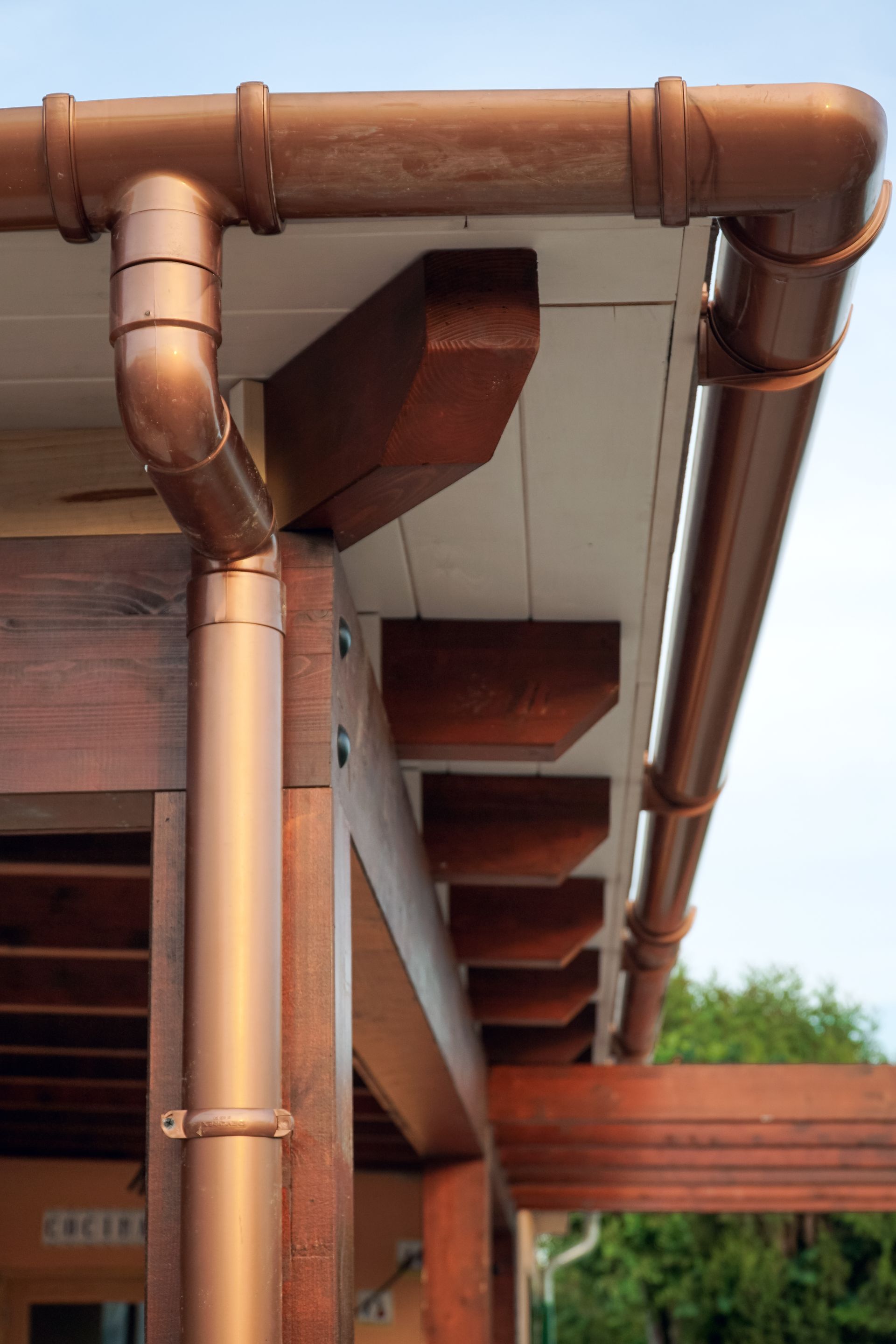
Gutters collect runoff from roof edges and carry it toward downspouts. A useful plan considers both where water enters the system and where it leaves.
The layout, attachment points, and downspout locations deserve attention alongside the visible profile.
Identify the roof sections involved and places where runoff appears concentrated.
Share any known damage or planned work to the boards and finishes along the roof edge.
Discuss proposed routes alongside doors, walkways, planting beds, and other exterior features.
Bring preferred colors, profiles, and any community guidelines that affect the selection.
Describe nearby trees, existing blockages, and practical access for cleaning.
Explain whether roofing, fascia repairs, painting, or other exterior projects are also planned.
If you are considering aluminum, discuss available profiles and finishes together with the proposed gutter and downspout layout.
Bring photographs or finish preferences so the appearance can be considered alongside the rest of the exterior.
Ask how the proposed components fit the roofline and which preparation or related work is included.
Copper can be considered when the visible gutter system is part of the home’s architectural design. Ask about project suitability, available profiles, and the components included.
Discuss the expected appearance over time, connections to other materials, and any custom fabrication requirements before selecting a system.
Discuss Copper Gutter Options →Share the architectural look you want and ask which profiles are available for the project.
Ask how the material’s appearance may change with exposure and what care is recommended.
Clarify the materials proposed for hangers, outlets, downspouts, and connections.
Confirm any custom components, ordering requirements, and effects on the project schedule.
For a nonstandard profile or layout, share photographs and any plans. Confirm which specialty options Bryton can provide for your property.
Ask about availability when a rounded profile is part of the intended exterior design.
Explain where a standard profile may not fit and provide any relevant drawings or dimensions.
Share preferences for visible collection heads, downspouts, and other architectural details.
Identify additions, changes in roof height, and junctions between different roof areas.
Ask whether a guard option suits the property and what inspection and cleaning it would still need.
Coordinate the discussion with planned roofing, fascia, painting, or other work along the roof edge.
Use these stages to discuss the proposed work, material choices, and responsibilities.
Identify the sections involved, reported concerns, and information needed to define the proposed installation or replacement.
Review the proposed layout and where each downspout would discharge.
Compare the available options against the proposed layout, exterior appearance, and project budget.
Discuss removal, preparation, access, and the sequence of any related roofing or exterior work.
Review the completed scope, downspout locations, and recommended maintenance.
Explain the drainage concerns you have observed and identify nearby features that matter to the proposed gutter layout.
Bryton’s listed office is at 1312 Commerce Lane, Suite 3A, Jupiter, FL 33458. Send your property address and requested work to confirm availability.
Ask About Gutter Project Availability →Describe when and where the existing system overflows or water collects around the home.
Share the desired appearance and ask about available materials, finishes, and care requirements.
Provide rules for visible profiles, colors, work access, and any required approvals.
Identify pools, pavers, planting beds, doors, and walkways near proposed downspout locations.
Contact Bryton to discuss aluminum gutter options for your property. Confirm available profiles, finishes, the proposed layout, and current installation availability.
Ask about copper gutter availability for your project. Share the intended appearance and confirm the profile, components, fabrication requirements, and scope before proceeding.
The term can describe an unusual profile, custom component, or layout that requires additional planning. Provide photographs or drawings and ask which options are available for the property.
No. The term generally describes long gutter runs formed without intermediate seams. Corners, outlets, end caps, and other connections can still have joints.
Ask for a recommendation based on the roofline and proposed drainage layout. Gutter size should be considered together with outlet locations, downspouts, and the roof areas being served.
No. Ask what inspection and cleaning the proposed guard system still requires. Discuss nearby trees, existing debris, and maintenance access before selecting an option.
Ask whether the projects can be coordinated and in what sequence. Confirm whether existing gutters will be removed, retained, or replaced, and how related fascia or painting work is handled.
No. Gutters manage runoff from the roof edges they serve. Other drainage concerns may require separate evaluation. Clarify which problems the proposed gutter scope is intended to address.
Share the association’s requirements and ask which product, color, or project information Bryton can provide. Confirm who is responsible for obtaining approval before work is scheduled.
Bryton is based in Jupiter. Send your address, property details, and requested work so the team can confirm project availability for your location.
Tell Bryton about the roofline, existing gutters, drainage concerns, and materials you are considering. Ask about availability and the next step.
Florida Roofing License CCC 1336269